On a soft spring afternoon in Portugal’s rugged Alentejo, the air is scented with citrus and the temperatures are finally climbing. For many people, the balmy weather would be a cue to relax—but for the Brent-Berkuses, there is work to be done on the 18-acre farm they are stewarding on a remote stretch less than half an hour from the Spanish border.
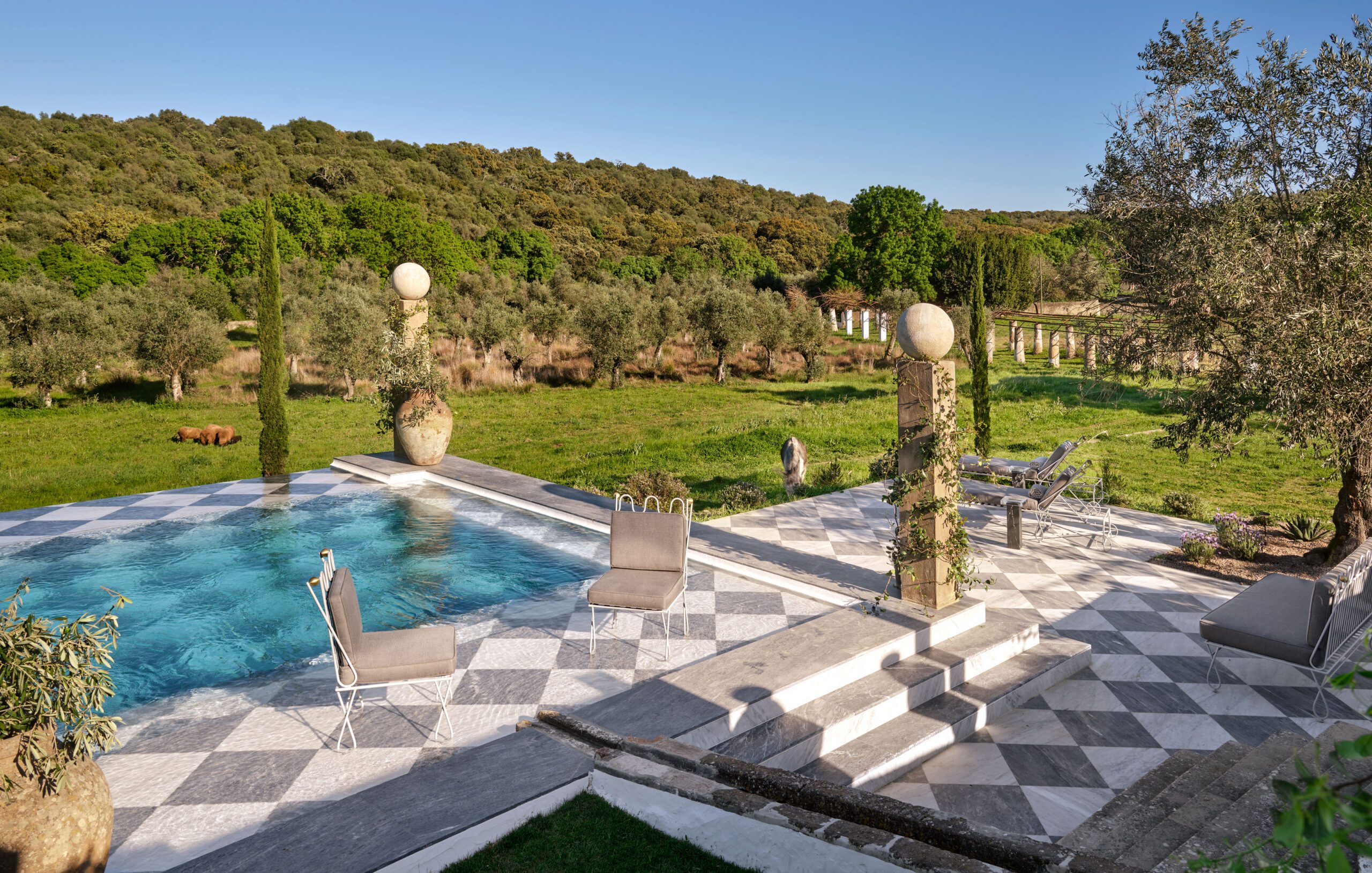
Jeremiah Brent is at the wheel of his vintage orange Kubota tractor, hauling plants and soil for his new vegetable garden. Nate Berkus is racing to fill barrels with ripe “Laranja-da-Bahia” oranges, trying to keep up with the surplus from the orchards. Their son, Oskar, eight, lends a hand but is eager to take a dip in the checkerboard marble pool his dads reimagined from an old water tank. Meanwhile, their daughter, Poppy, 11, is wandering through fields of French lavender, armed with a walkie-talkie, keeping an eye out for snakes, searching for peacocks, and hoping to run into her grandmother, who lives on the property.
The Portuguese retreat is nothing like the family’s two residences on the other side of the Atlantic. Those artfully appointed homes, in Greenwich Village and Montauk, are almost as well-documented as the lives of the AD100 duo who created them. Brent is fresh off his stint on the final season of Queer Eye; Berkus is the Oprah-endorsed home-design phenomenon whose celebrity now rivals that of his Hollywood clients. Neither man is camera shy. But their ranch in Portugal—nearly five years in the making, and finally ready for its close-up—has until now been a private affair. “If I’m being totally honest, this one is hard to share,” Brent admits. “It’s the first time I’ve ever felt so protective about a place.”
Later that day, Brent and Berkus are seated in front of a cavernous granite fireplace in the dining room, discussing whose idea it was to buy a home in Portugal. There is no debate. “Yours,” Berkus says, throwing a bemused glance toward his husband. Brent nods. “It’s usually me with the crazy ideas,” he admits. But this one was deeply personal. Growing up in California’s Central Valley, he was especially close to his grandmother Arline, who emigrated from Portugal. “She was fascinating, so tough but so sweet to me,” recalls Brent, who sports a hummingbird tattoo on his arm in her memory. “She would sit in a corner of her kitchen and have dominion over everybody.”
The pieces started slowly coming together—garden by garden, orchard by orchard, wall by wall, room by room.
Brent’s mother, Gwen—a former police officer and paralegal—had always dreamed of retiring to Portugal. Her son made it happen.
When the designers learned that their friend, art dealer André Viana, had moved to a windswept corner of the Alentejo region from New York City, they were surprised at first. Then, a little concerned when he did not return, they paid him a visit. “We got here and my mouth was wide open when I saw what he had built,” Brent says. “He seemed different—lighter, his life in balance. I was super envious.”
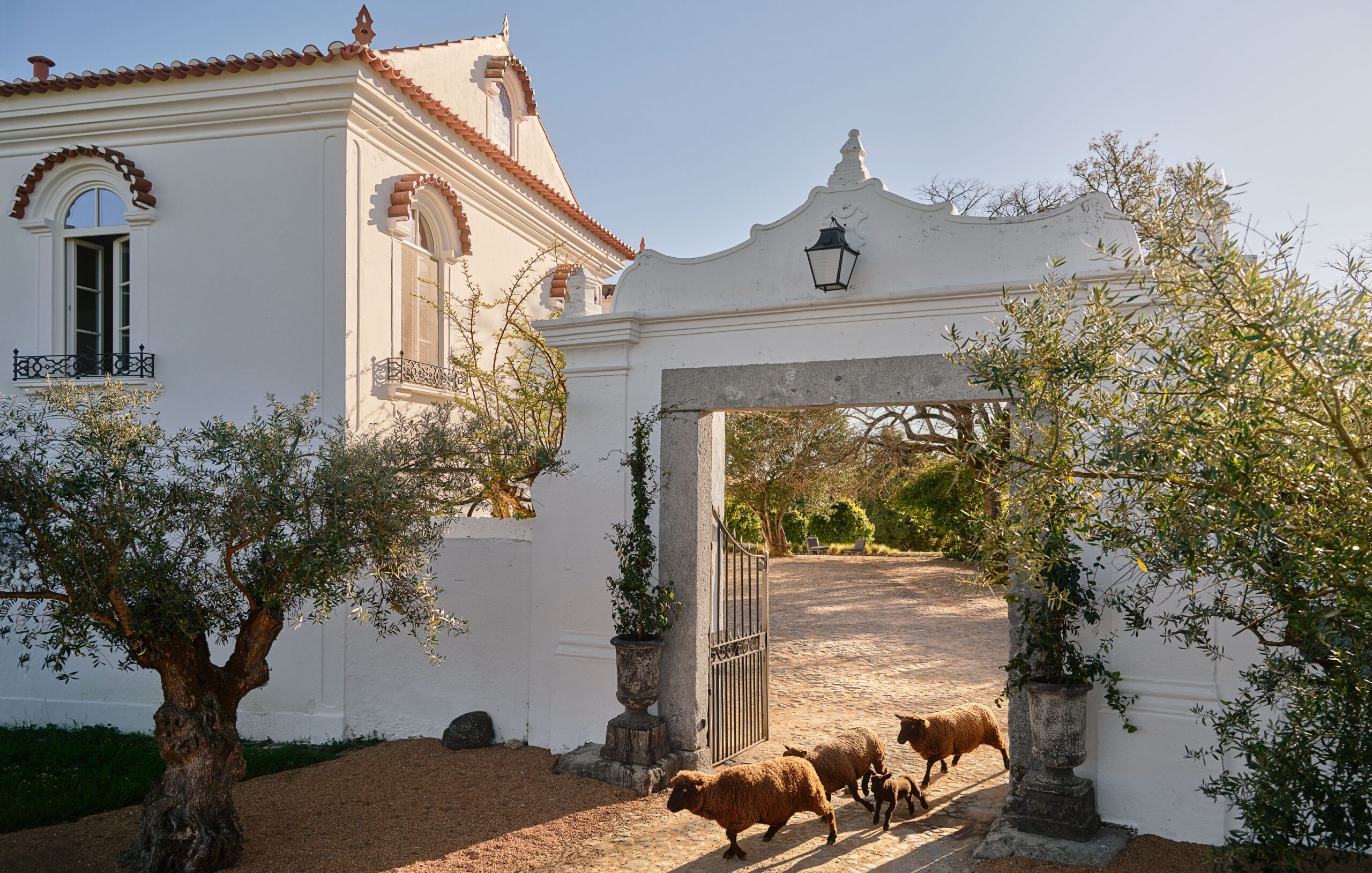
He imagined creating something similar for his own family. Berkus, who has always been drawn to Europe, was on board. After they asked Viana to keep a lookout for real estate, he called to say he had found a gem: a centuries-old farm that once belonged to a prominent family of landowners. At the end of a two-mile entry road, a whitewashed arch led to a cluster of ruins that felt like its own tiny village, with a crumbling chapel, a former bread bakery, and a neglected two-story farmhouse where the original inhabitants lived above the stable. The rolling landscape, nestled between a nature preserve and a cattle ranch, had silvery groves of ancient olive trees, a meandering creek, and a network of antique aqueducts snaking through the fields.
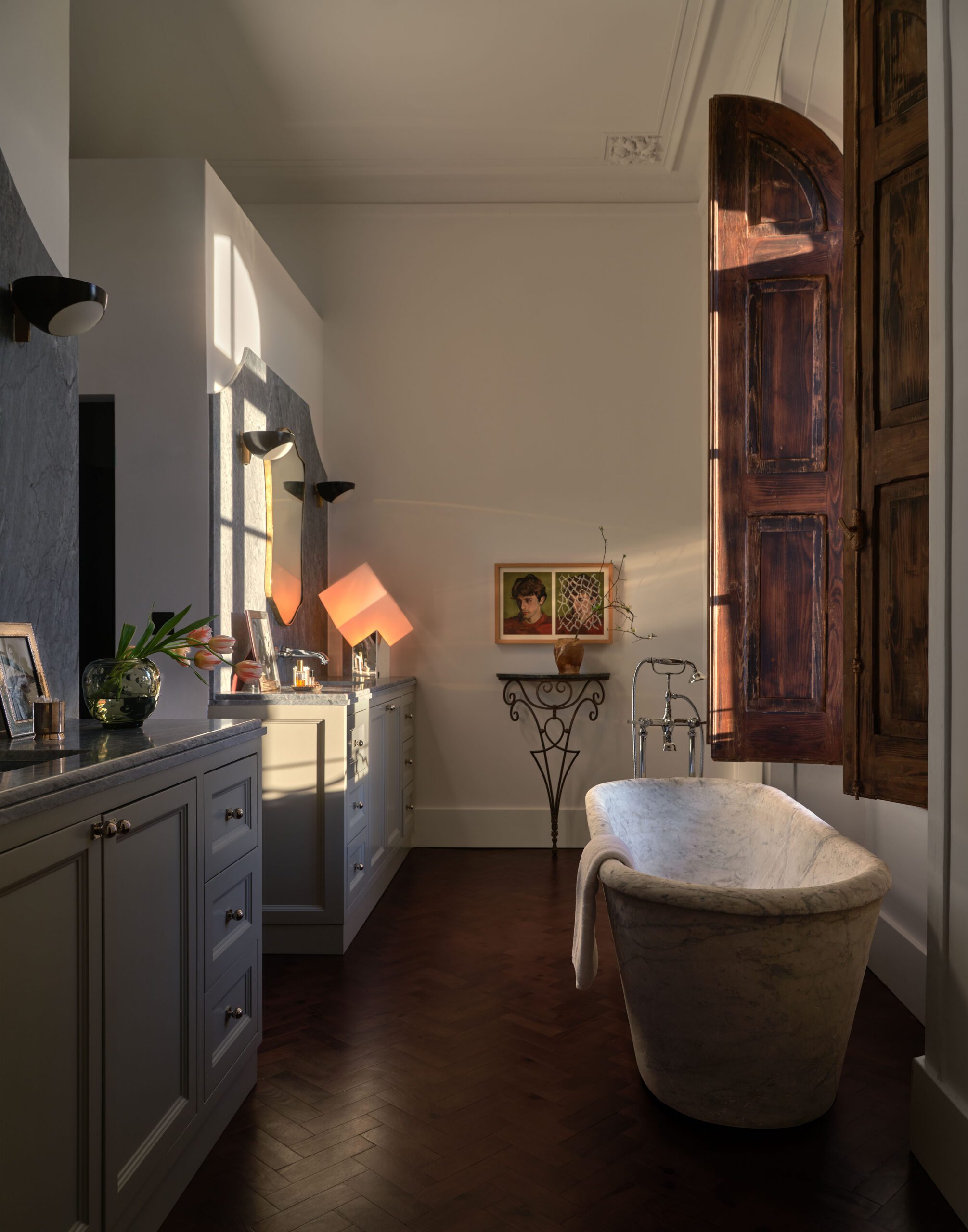
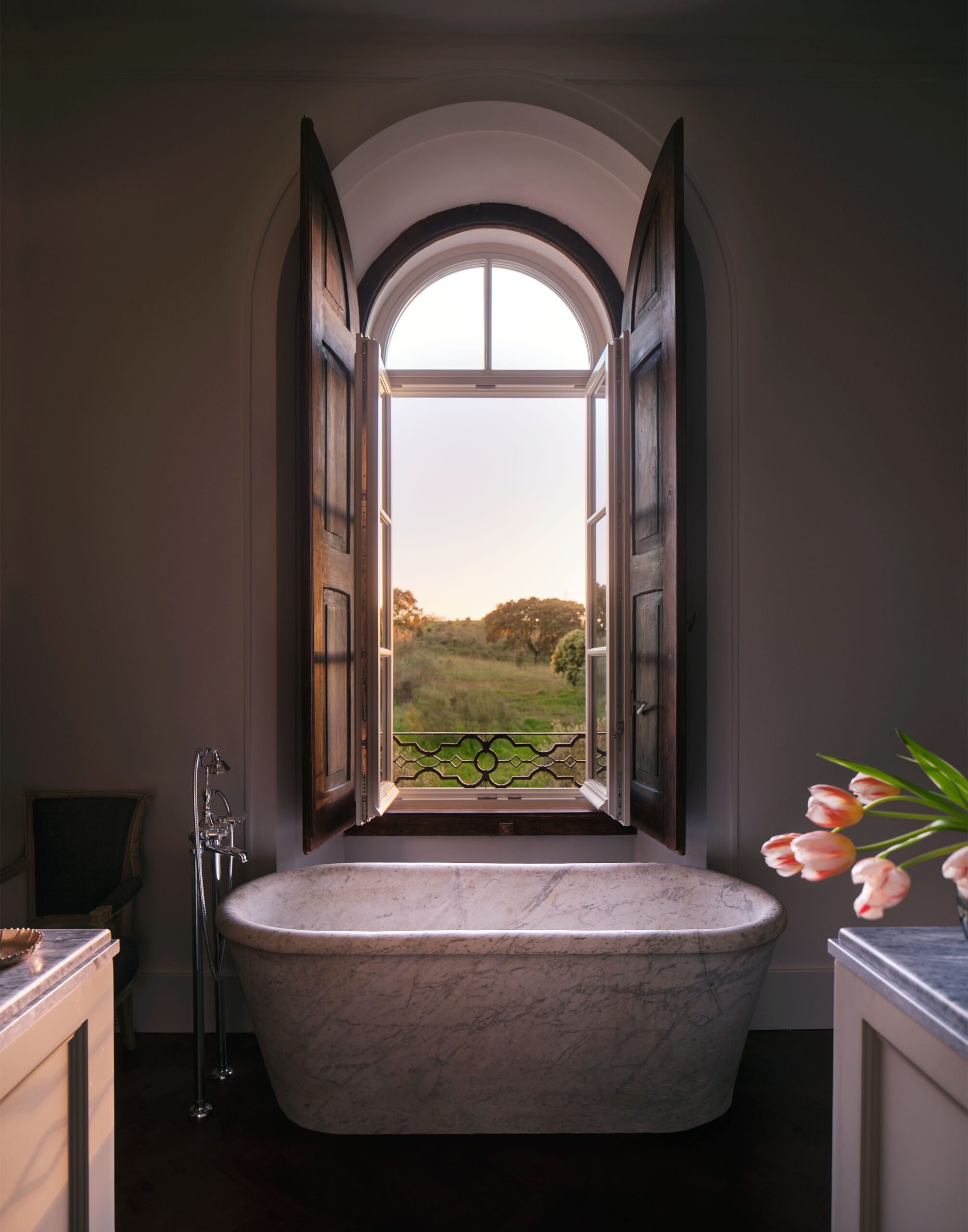
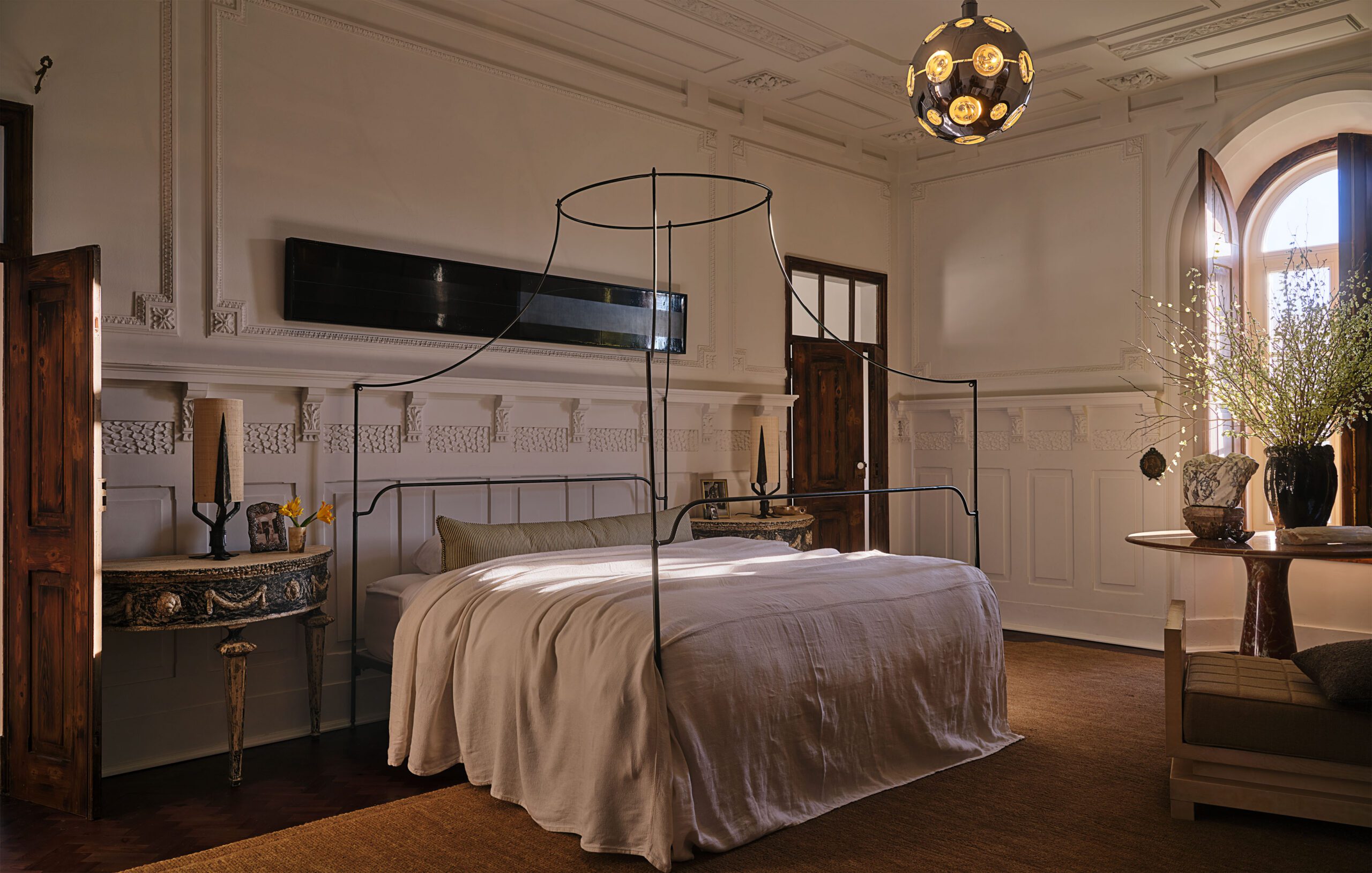
Brent and Berkus came to visit and snapped it up—then faced the consequences of that decision. On their first two trips to the property, the enormity of the task at hand—and their utter naiveté in taking it on—sank in. “We’d have these nights where we were just so stressed and overwhelmed,” Berkus says. “We couldn’t visualize what the place could be, and we didn’t know who to talk to about it.”
Humbled, they made a conscious decision to let go of their American design instincts and lean into the local knowledge around them. They reached out to their neighbors in the nearby village, and enlisted a team—including architect Cristina Guerra, landscape architect Joana Bizarro, and Marta Manoel who oversaw the renovation— all versed in the regional agriculture and building methods. Before they could even start renovating and decorating, they focused on the farm, repairing the old aqueducts, researching soil conditions, and learning to tend sheep. “Oprah used to say all the time, ‘I don’t care about my house; I care about my trees,’ ” Berkus recalls. “Now, for the first time, I understood. The pieces started slowly coming together—garden by garden, orchard by orchard, wall by wall, room by room.”
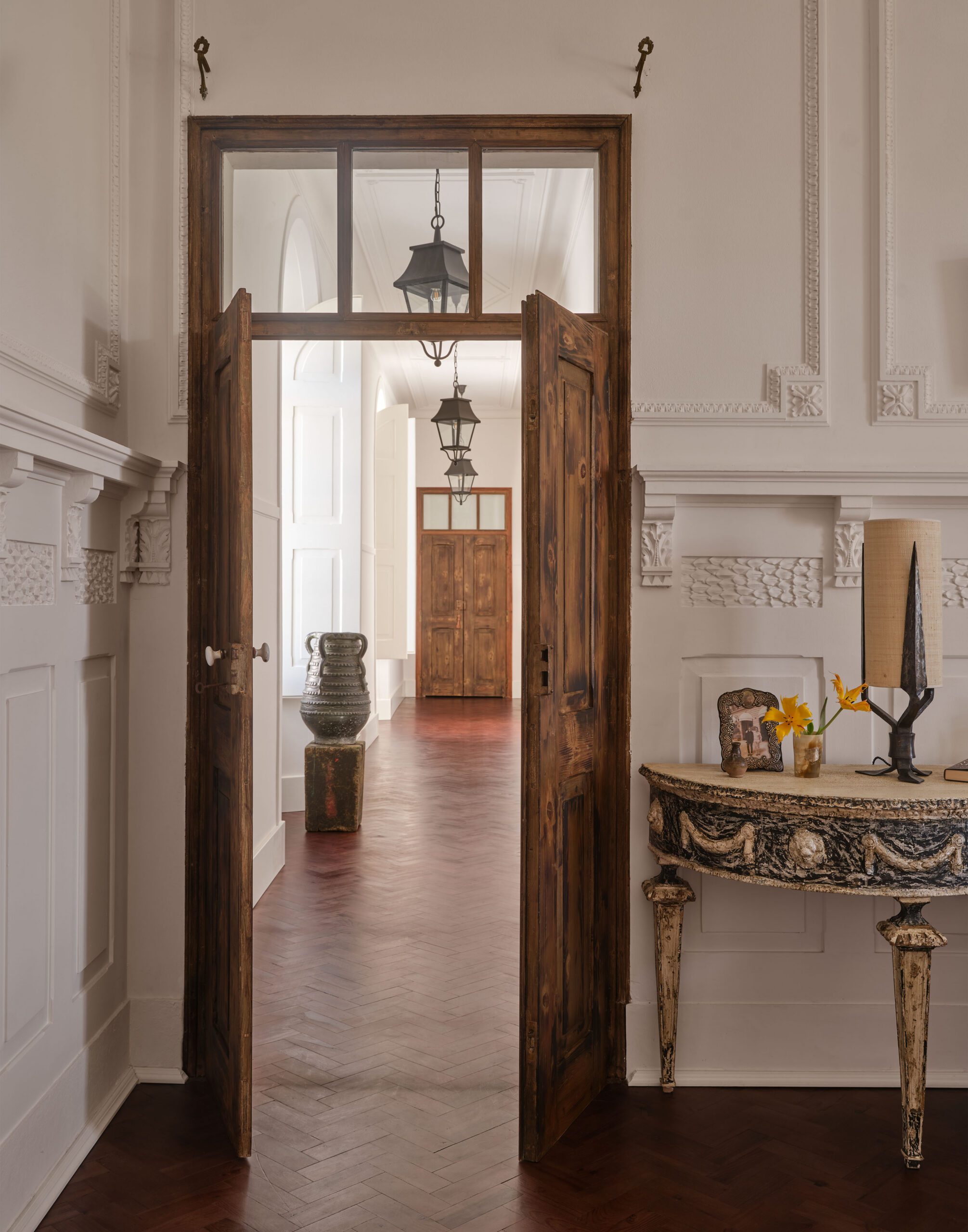
The first building they renovated was the old bakery. They converted it into a small home, now occupied by Brent’s mother and her husband, who moved here full-time from Chicago. When it came time to tackle their own house, they tried to strike a balance between restoring what was there and adding creature comforts like air-conditioning and a laundry room, along with their own signature touches.
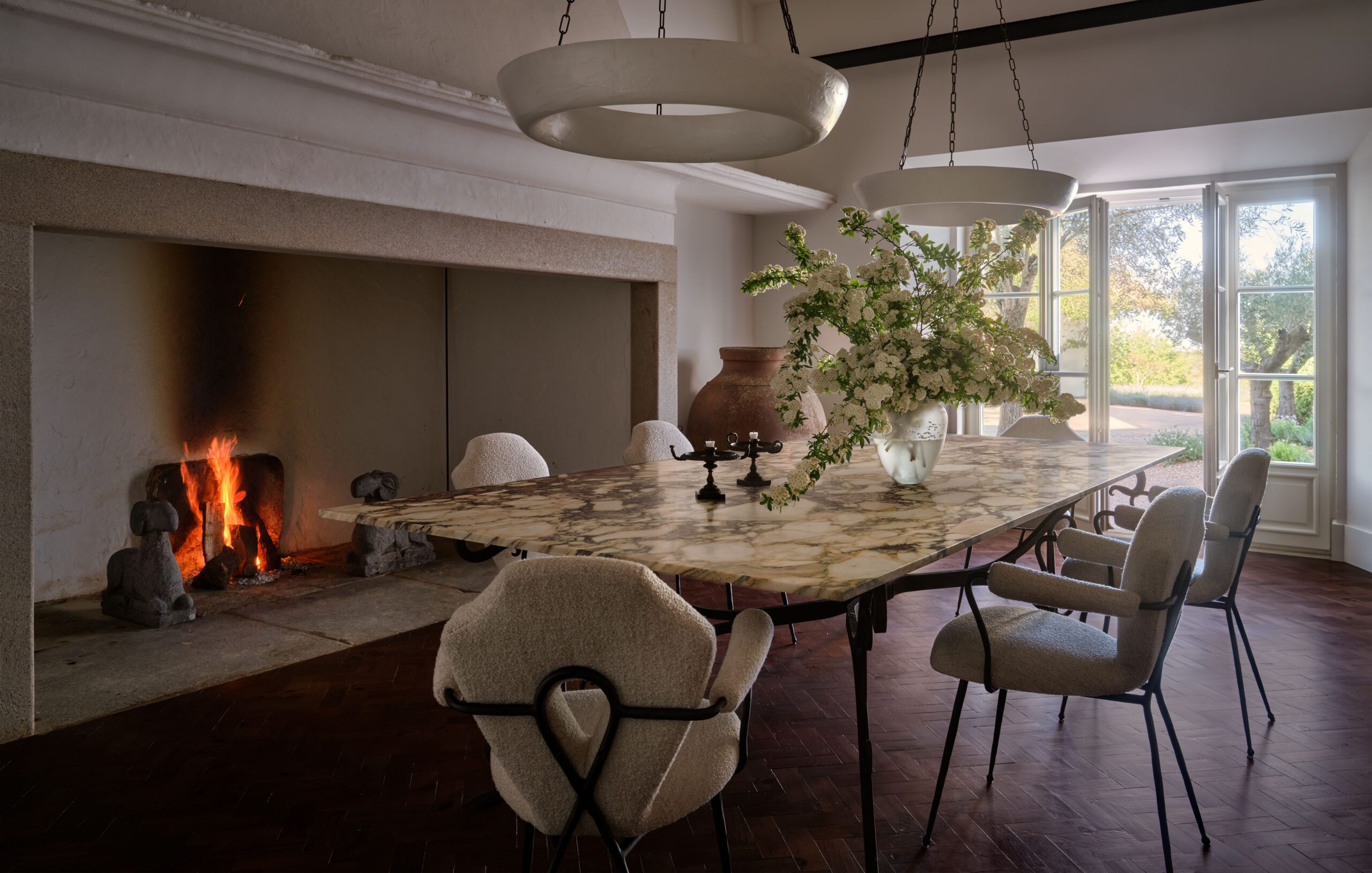
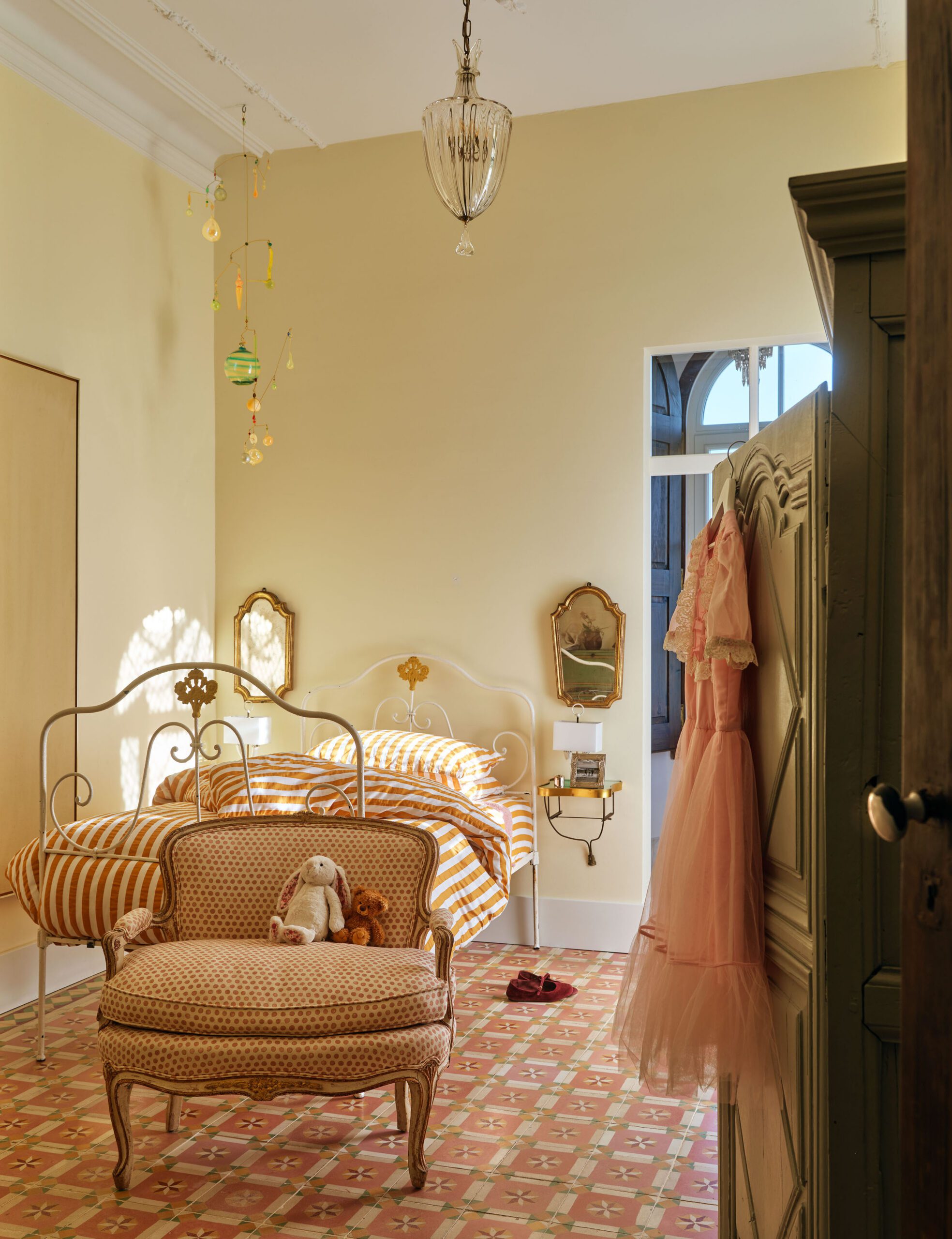
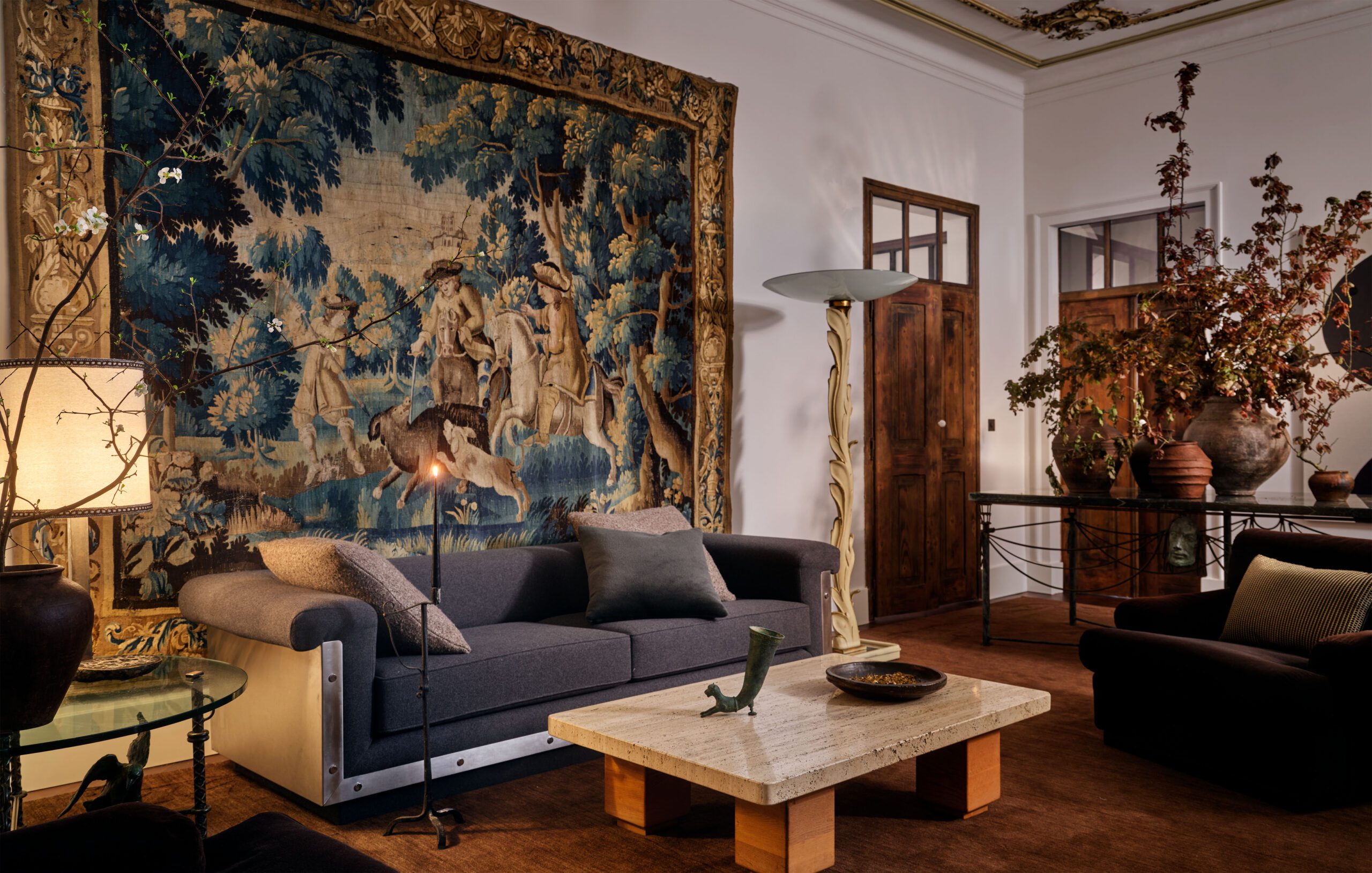
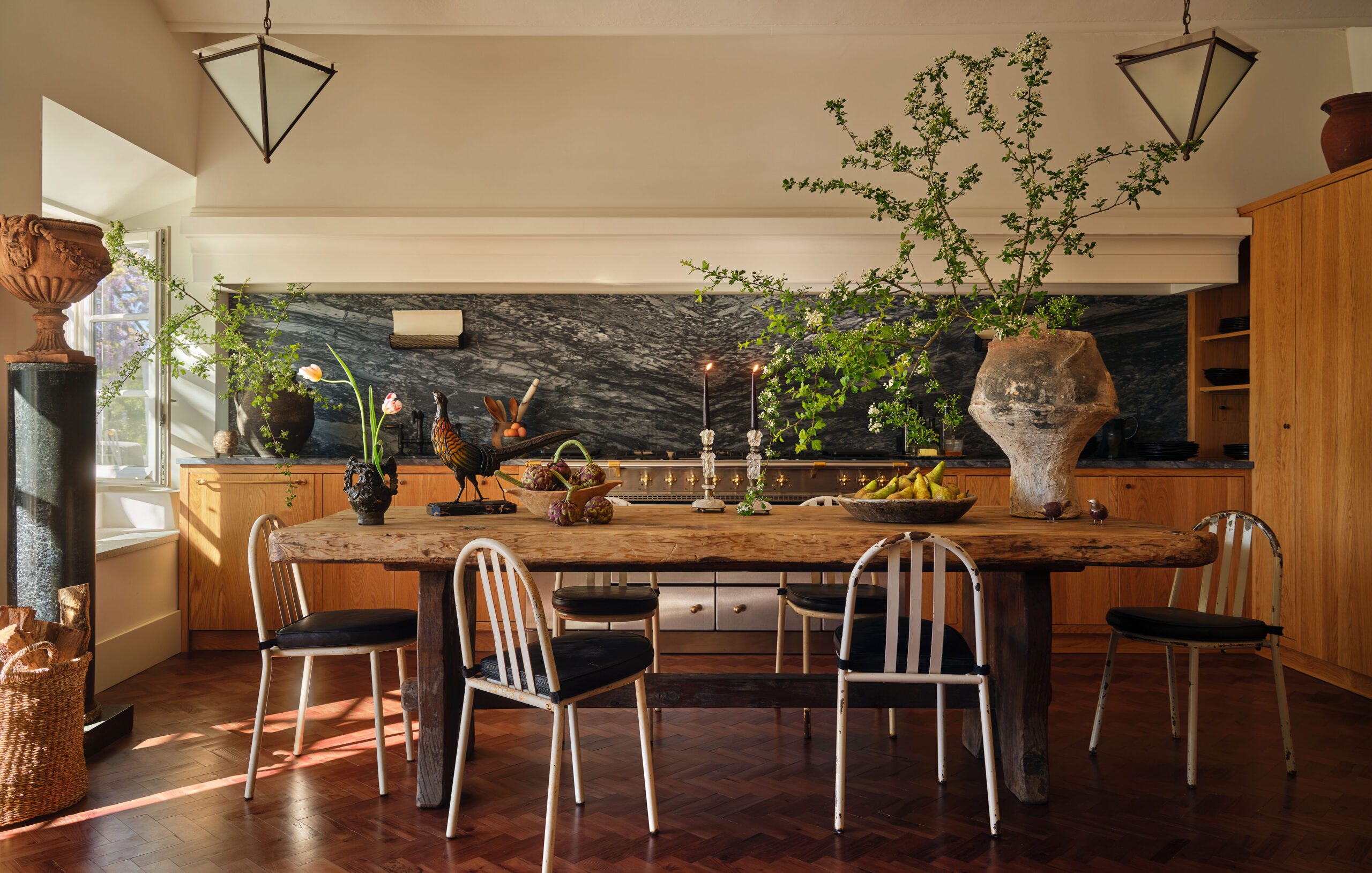
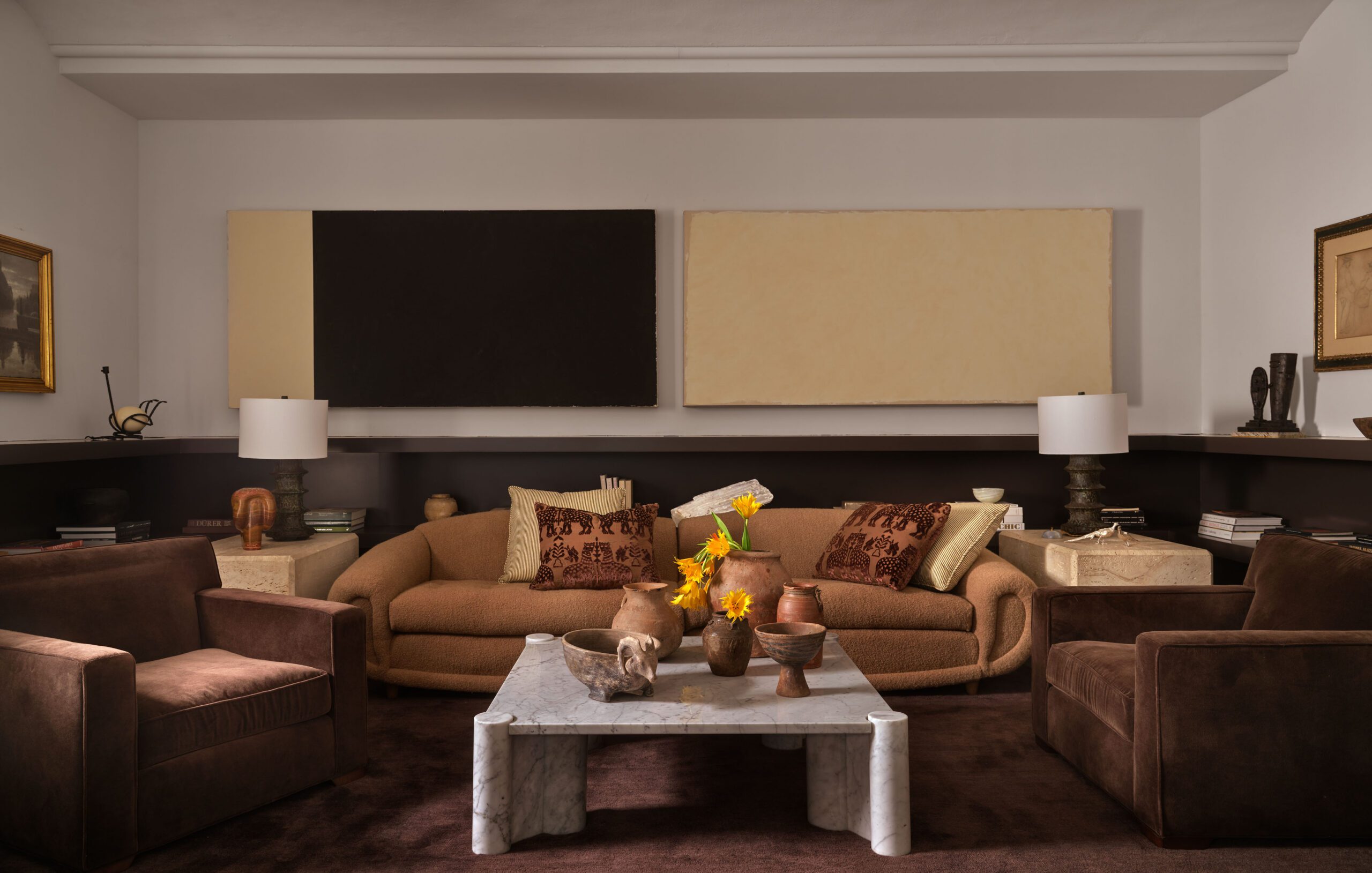
They took advantage of furniture purchased along with the property, a trove that includes a set of kitchen chairs by the French modernist Robert Mallet-Stevens; an iron bed and armoire that Poppy claimed for her room; and an antique hunting scene tapestry in the upstairs parlor. They then added vintage pieces purchased at European auctions, furniture from their own collections, and what Berkus calls “smalls”—from bird sculptures to Portuguese ceramics and dozens of books shipped over from their library in New York. “It’s the most maximalist place we’ve ever lived, but I find it so soothing and comfortable,” Brent says.
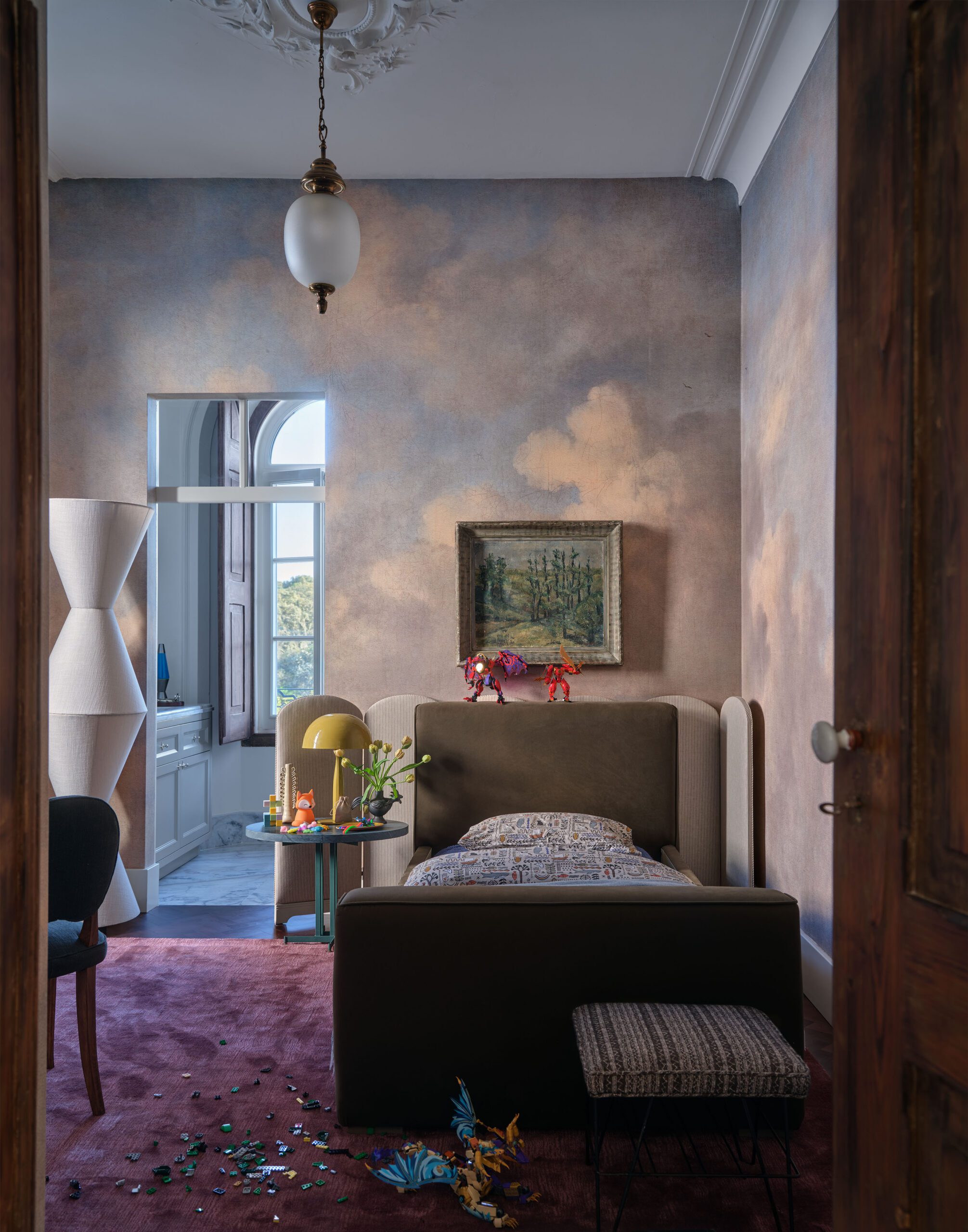
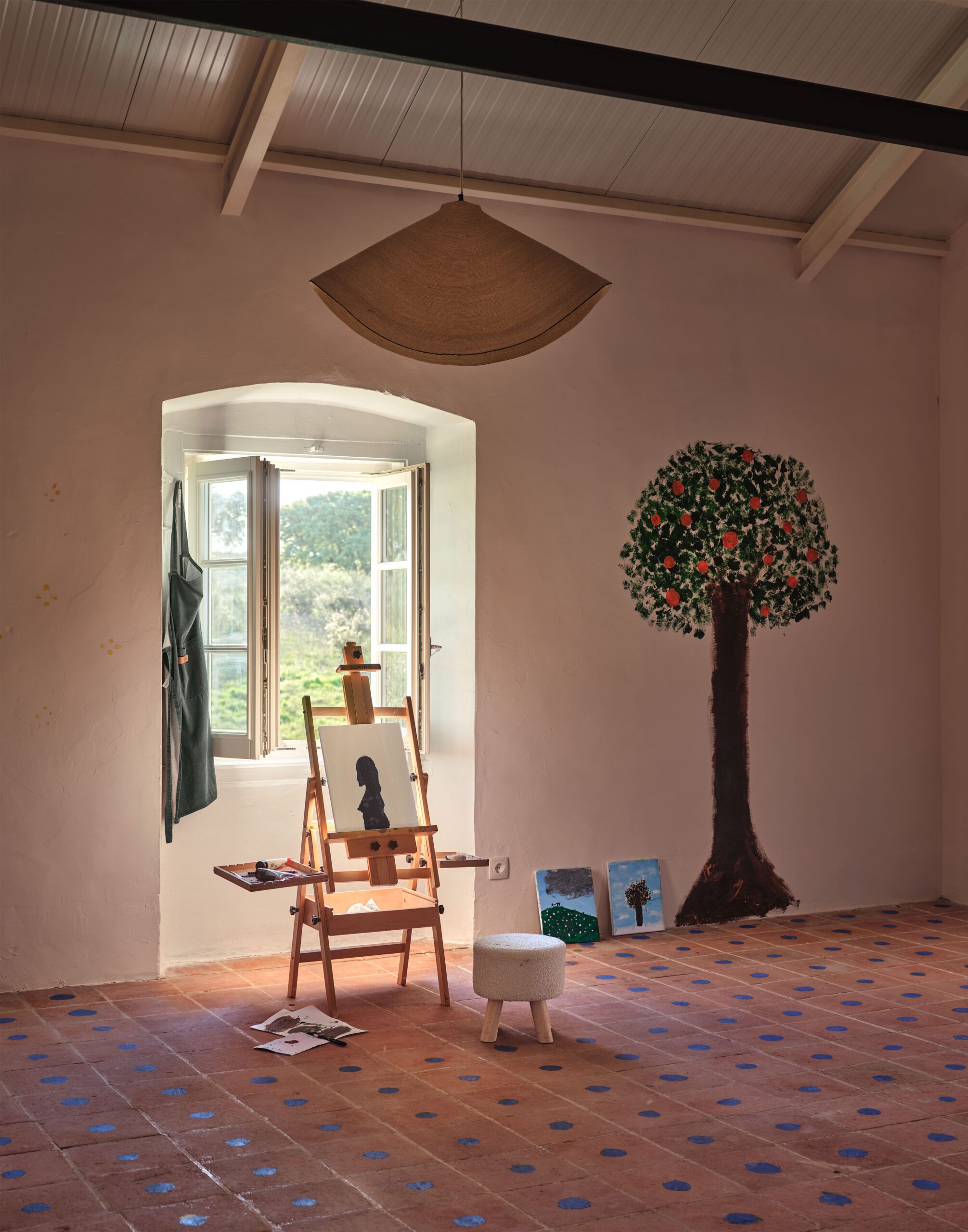
When their friend writer Michael Hainey and his wife, Brooke, came to visit, everyone gathered in the kitchen for Brent’s signature breakfast of scrambled eggs, banana pancakes, and fresh orange juice, followed by Lego sessions with Oskar and afternoon hikes. Brooke and Poppy retreated to the art studio in another restored building on the property. “There is a sense of magic here,” Hainey says. “They’ve brought the place back to life and beauty. More than anything, the family makes it special. The love among the four of them radiates through the house.”
While New York remains their base, Berkus and Brent hope to spend as much as four months a year in Portugal during their children’s school breaks and vacations. They cherish their alone time here, with active days followed by serene evenings taking moonlit walks under inky skies sparkling with constellations of stars. “What’s beautiful is hearing my kids run down a pea-gravel path on their way to have a piece of cake warm out of the oven at Gijo’s, which is what they call my mother,” Brent says. “In New York, I get up early and go, go, go. Here, I sleep a little longer. I like the nights. It’s the most beautiful time of quiet.”